


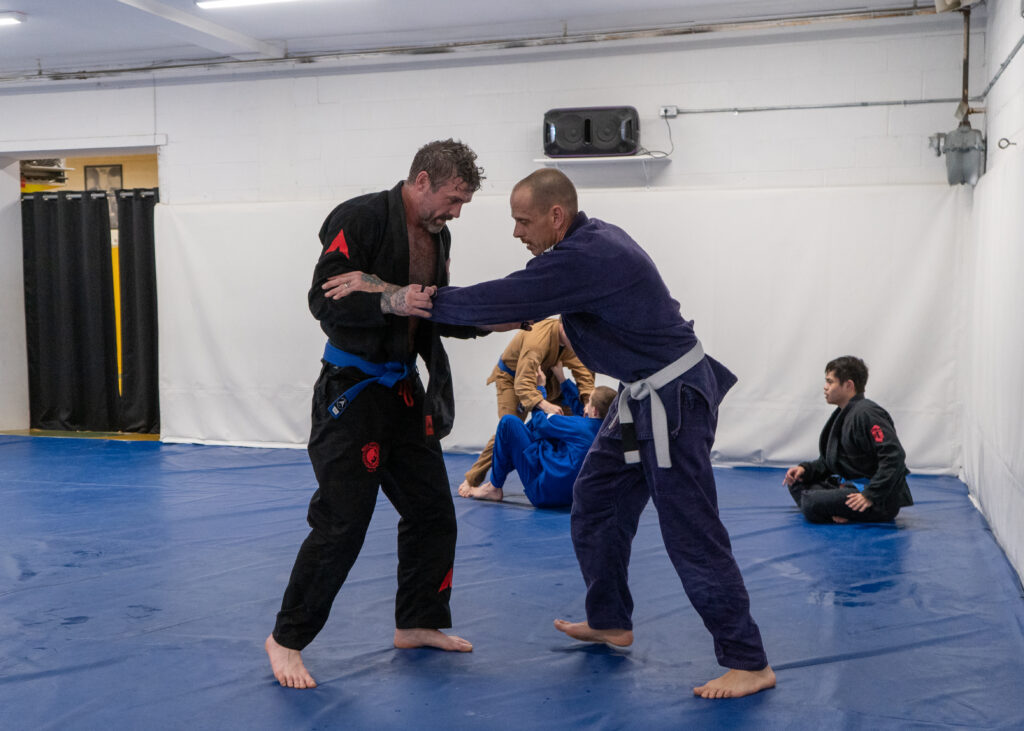
If you’ve searched “Brazilian Jiu-Jitsu Regina” or “BJJ Regina,” there’s a good chance you’re curious — but hesitant.
Most adults who walk through our doors are thinking one of two things:
“I’m out of shape.”
“I’m too old.”
Sometimes both.
Let’s deal with that honestly.
Who Actually Starts BJJ?
The typical new beginner at Ascendant Martial Arts is between 25 and 35 years old.
Not 18-year-old competitors. Not professional fighters. Regular adults.
People with careers. Families. Responsibilities.
Many haven’t done anything athletic in years.
And almost all of them say the same thing before their first class:
“I’m probably going to die.”
They don’t.
“I’m Out of Shape.”
You’re not supposed to get in shape before starting Brazilian Jiu-Jitsu. You get in shape by doing Brazilian Jiu-Jitsu.
Waiting until you’re “fit enough” is backwards.
BJJ training builds strength, mobility, cardiovascular conditioning, coordination, and body awareness. But more importantly, it builds useful skill.
This is not random sweating. It’s problem-solving under pressure.
You are learning how to control another human being — and how to prevent them from controlling you. That engages your brain and body at the same time.
If you could only choose one activity, it makes more sense to train somewhere that improves your physical capacity, develops mental resilience, builds actual skill, and creates real social connection.
A casual fitness gym can complement that. But if you’re choosing one foundation, skill-based martial arts training wins.
“I’m Too Old for Martial Arts.”
You’re not too old.
You may not be 20. But you don’t need to be.
Brazilian Jiu-Jitsu is heavily technical. Timing, leverage, positioning, and strategy matter more than raw athleticism.
We have beginners who start in their 30s and 40s. The goal is not to become a professional fighter. The goal is to improve. To learn. To challenge yourself. And to build something that compounds over time.
Is BJJ Dangerous?
Let’s be honest. It’s a contact sport. Injuries can happen.
At Ascendant Martial Arts, serious injuries are rare — but they have occurred. They were freak accidents. Not predictable. Not the result of chaos.
The difference between a reckless environment and a professional one is structure.
How We Keep Beginners Safe
Most adult classes are built around positional drills, situational training, controlled sparring, and progressive exposure.
Beginners are not thrown into full-intensity matches on day one.
You build understanding first. You build awareness first. You build control first.
That dramatically reduces risk.
No gym can promise zero injuries. But a well-structured program minimizes unnecessary risk through supervision and culture.
“I Don’t Want to Look Stupid.”
This is the quiet concern most adults don’t say out loud.
They’re worried about not knowing what to do, being the worst in the room, and feeling awkward.
Here’s what surprises most new students: everyone is welcoming. And it’s not as scary as they thought.
Higher belts remember exactly what it felt like to start. No one expects you to be good. They expect you to try.
And the culture at Ascendant is clear: we are here to learn and improve — not to dominate beginners.
What Makes BJJ Different from Other Martial Arts?
Traditional martial arts schools often sell fantasy — pre-arranged forms, cooperative drills, no real resistance.
Brazilian Jiu-Jitsu is built around live resistance. You practice techniques against someone who is actively trying to stop you.
That creates real feedback. You find out quickly what works, what doesn’t, and where you need to improve.
That honesty is uncomfortable at first. But it’s also what makes the skill real — and why BJJ has become one of the most popular self-defence systems in the world.
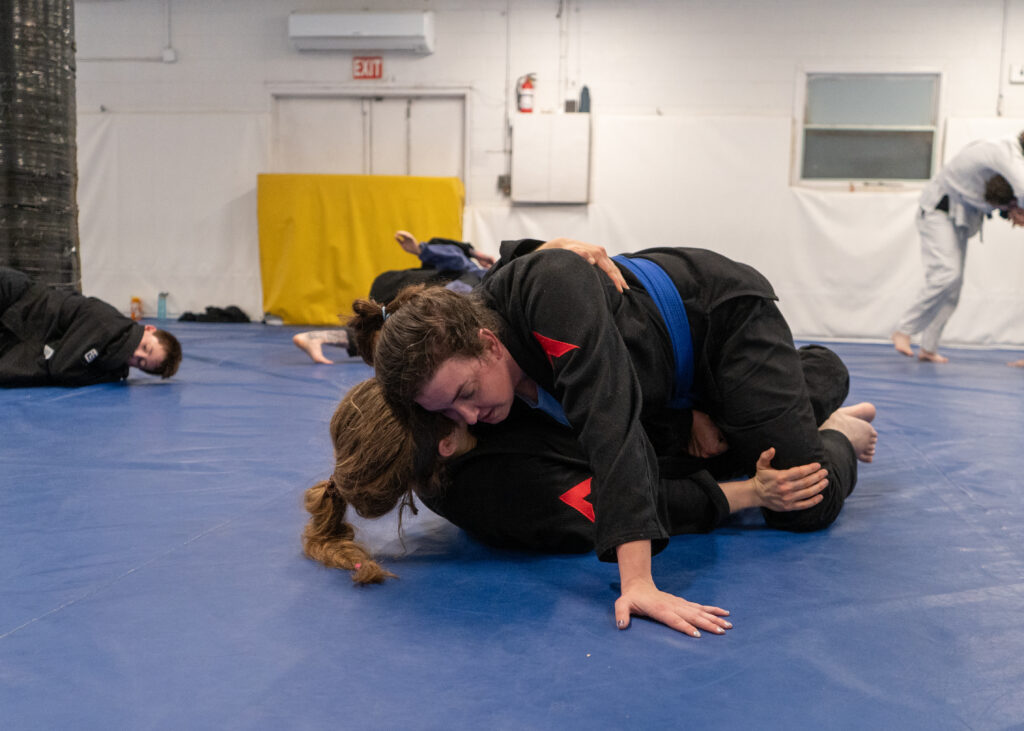
What Does a Beginner BJJ Class in Regina Look Like?
A typical adult class at Ascendant Martial Arts includes:
Technical Instruction
Your coach breaks down a concept and demonstrates techniques that illustrate it. At Ascendant, classes are led by experienced coaches including Sean Quinn — a competitive Brazilian Jiu-Jitsu and MMA athlete who has coached hundreds of beginners through their first months on the mats.
Positional Drilling
You repeat movements with a training partner at a controlled pace, building muscle memory and understanding.
Situational Rounds
You work from specific positions with a clear objective — learning to solve problems, not just memorize moves.
Controlled Sparring
Live rolling with experienced partners who help you apply what you’ve learned in real time.
You’re not expected to “win.” You’re expected to engage.
Most of your early improvement comes from repetition, pattern recognition, small adjustments, and learning to stay calm under pressure.
Why People Stay
People don’t stay because it’s easy. They stay because they feel improvement, they feel challenged, they feel welcomed, and they feel part of something.
BJJ becomes more than exercise. It becomes a stress outlet, a thinking outlet, a community, and a long-term pursuit.
And unlike many fitness programs, the skill compounds. A year in, you are not the same person who walked in.
What Happens If You Try It and Don’t Like It?
Then you gained experience. Most people regret not starting more than they regret trying.
Ready to Try BJJ in Regina?
Ascendant Martial Arts offers a One-Week Trial for $30.
You get multiple classes, real exposure, real training partners, and real coaching. No guessing. You’ll know within a week whether it’s for you.
Book Your Free Trial → email us at [email protected]
If you’re searching for beginner martial arts classes in Regina and hesitating because you think you’re out of shape or too old, understand this:
Almost everyone who starts felt that way.
The only difference between those who improve and those who stay curious is that some decide to walk through the door.