


If you’re a parent in Regina looking for the right activity for your child, you’re not just looking for something to fill time. You want something that builds confidence, teaches discipline, and helps your child grow — not just physically, but mentally and emotionally.
That’s where kids martial arts can make a real difference. But not all programs are the same, and choosing the wrong one can mean wasted money and a child who quits after two months.
This guide covers what actually matters when evaluating children’s martial arts programs in Regina — from coaching quality to class structure to how the right environment keeps kids engaged for years, not weeks.
What to Look For in a Kids Martial Arts Program
When families visit martial arts schools in Regina, the most common concerns are scheduling, class size, safety, and whether their child will stick with it. Those are the right questions. Here’s what the answers should look like.
Coaching Ratios and Supervision
For younger kids especially, coaching ratios matter more than facility size or brand name. A child in a class of 30 with one coach isn’t getting coached — they’re being managed.
At Ascendant Martial Arts, the ages 4–7 program typically runs with 15–20 kids and 3–5 coaches on the floor. The ages 8–13 program runs with 20–30 kids and 4–6 coaches. That means your child gets direct supervision, real-time correction, and personal attention throughout every class.
Structured Curriculum
Kids don’t stay engaged with randomness. They stay engaged with progress.
A quality program has a written curriculum that builds skills week by week, challenges kids at the right level for their age and experience, and gives coaches a clear plan for every class — not a bag of drills they pick from on the spot. If a school can’t explain what their curriculum looks like or how skills progress over time, that’s a red flag.
Community and Culture
Skill keeps kids improving. Community keeps them showing up.
When children feel like they belong to a team, they don’t quit as easily. That culture — how kids treat each other, how coaches interact with families, how new students are welcomed — matters more than most parents realize when choosing a program.
Is Martial Arts Safe for Kids?
Safety is one of the biggest concerns for parents exploring kids martial arts in Regina, and it should be.
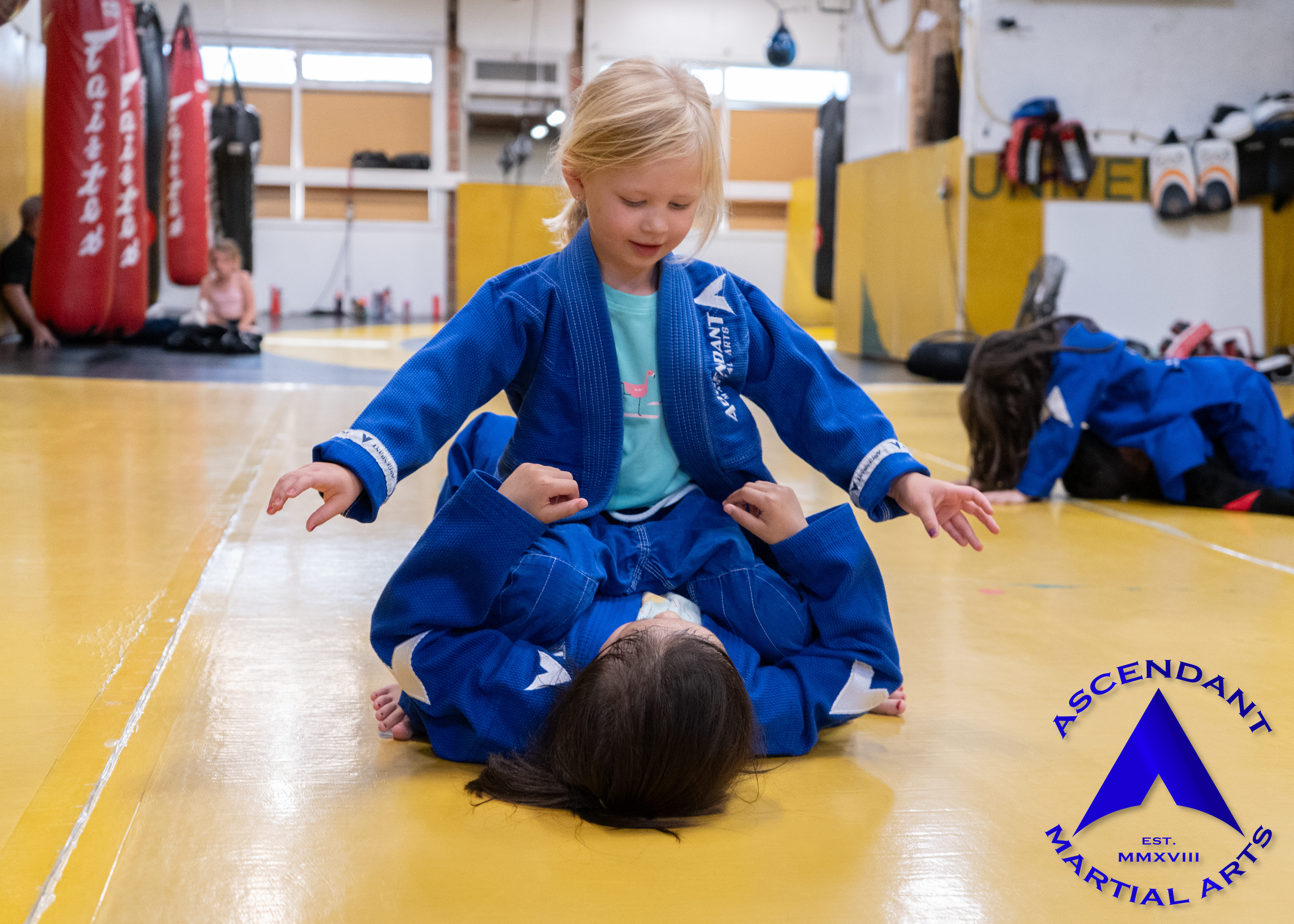
In a well-run program, martial arts is highly controlled. At Ascendant, kids are introduced to techniques gradually, safety rules are enforced consistently, coaches supervise every drill, and training is structured around age-appropriate development. Beginners aren’t paired against experienced students in live sparring. Contact is progressive — introduced only after a child has built foundational awareness and control.
For a deeper look at how safety works in a structured martial arts environment, see The Complete Beginner’s Guide to BJJ in Regina.
What If My Child Is Shy, Not Athletic, or Has Been Bullied?
This comes up more often than most people think. A significant number of kids who join Ascendant aren’t the loud, athletic types. They’re the quiet ones. The ones who’ve struggled socially. The ones whose parents are hoping that something — anything — will help their child come out of their shell.
What typically happens is gradual but visible. As a child gains competence in training, they gain confidence outside of it. As they work with the same partners week after week, they form real friendships. As they overcome small physical and mental challenges on the mats, they start carrying themselves differently everywhere else.
Kids who joined barely making eye contact have gone on to lead warm-ups, mentor newer students, and compete in tournaments. Martial arts doesn’t just teach self-defence — it builds a belief in their own capability that many of these kids have never experienced before.
What to Expect by Age Group
Ages 4–7: Foundation Years
At this stage, the focus isn’t purely sport. It’s about learning how to control and move their body, developing listening skills, working cooperatively with a partner, following instructions, and building coordination. A major focus is helping kids learn how to learn — the martial arts skills are important, but the developmental skills are foundational.
Ages 8–13: Skill Development and Sport-Specific Training
Older kids continue building discipline and coordination, but the focus shifts toward technical skill development, strategy, sport-specific training, and increasing accountability for their own effort and improvement. This is where kids begin to see measurable progress and take real ownership of their development.
For kids who are interested, optional competition pathways open up at this stage. For more on how competition works and whether it’s right for your child, see Should My Child Compete in Martial Arts?
Why Kids Lose Interest — and How the Right Program Prevents It
One of the most common reasons kids quit activities is loss of engagement. This usually happens when classes feel repetitive, there’s no visible progress, the challenge level is wrong, or kids don’t feel connected to the people around them.
The antidote is a program that provides progression, variety, appropriate challenge, and a sense of belonging. This is where Ascendant’s multi-discipline model becomes a real advantage.
Under one roof, kids can train in Brazilian Jiu-Jitsu, wrestling, kickboxing, and no-gi grappling. That variety keeps training fresh and builds well-rounded athletic development. A child who’s feeling stale in one discipline can try another without leaving the academy — and many kids end up training in two or three.
For a deeper look at how structure and enjoyment work together to keep kids engaged long-term, see Kids Martial Arts in Regina: Why the Best Programs Balance Discipline and Fun.
What Makes Ascendant Martial Arts Different
There are several martial arts options in Regina. Here’s what specifically sets Ascendant apart.
More Disciplines Than Any Other Academy in Regina
Ascendant offers BJJ, no-gi grappling, wrestling, kickboxing, and MMA — all under one roof with dedicated coaches for each discipline. Families don’t have to choose one martial art or drive across the city to piece together a training schedule. Kids can explore multiple styles and find what resonates with them.
Coaching Credentials That Back Up the Culture
Programs are led by coaches who take their role as coach seriously. Head coach Sean Quinn is an active BJJ competitor, with a history of competing in wrestling and MMA, who oversees curriculum design across all youth programs. Wrestling is led by Hajar, who is also an active BJJ competitor (and a 2 time Masters World Champion at Blue Belt and Purple Belt) and kickboxing is headed by Matthew (who is a student of the sport that could rival some of the best coaches in Canada)— each a dedicated program head responsible for the quality and progression of their discipline. Kids classes are supported by trained class leads and assistants who maintain consistent coaching ratios.
A Community Families Talk About
The most common feedback from Ascendant families isn’t about technique or trophies — it’s about how quickly their child felt included. The culture is energetic, welcoming, and team-oriented. Kids are held to real standards, but they’re supported while rising to meet them. Train like a team. Compete like a family. That’s not a tagline — it’s what parents see when they walk in.
A Structured Curriculum, Not Random Drills
Every class at Ascendant follows a concept-driven curriculum designed around progression. Coaches know what last week covered, what this week builds on, and where next month is headed. That level of planning is what separates a professional youth program from a drop-in class.
How to Get Started
If you’re exploring kids martial arts in Regina, the best way to decide is to experience it.
Ascendant Martial Arts offers a One-Week Trial for $30. Your child gets to experience multiple programs, meet the coaching team, train with their age group, and decide what they enjoy most. No long-term commitment required — just one week on the mats to see the difference for yourself.
If you’d prefer to watch first, you’re welcome to schedule a tour and observe a class in action.
Book Your Child’s Trial → here